

Seed is the primary input of agriculture. Indigenous seeds, which are locally adapted and evolved over generations, are crucial for agroecological farming and a sustainable approach that focuses on ecological and social principles. These seeds enhance soil health, climate resilience, and food security by working in harmony with nature.
i-Concept has taken an initiative to revive, replicate and promote the indigenous seed system in associated local knowledge system involving custodian farmers and farming communities through regular trainings and orientations to conserve and undertake seed treatment. To demonstrate and trial in PVT, also we have set up “Central Seed Bank” in Maa Mati campus at Pipili, Puri and two community-based seed banks in Dhenkanal and Nayagarh. The organisation works with seed custodian farmers and the local communities to enhance their control over to conserve their local genetic resources.


A community driven revival of Odisha's celebrated heirloom aromatic rice through purely natural, chemical-free farming.
The moonsoon season has brought steady rains and open skies across Pipili district. At the Maa Mati farm, the agricultural season is in full swing. Local farmers and field workers have stepped into the flooded, rain-soaked fields to carry out the transplantation of two celebrated indigenous rice varieties: Govindabhog and kalajeera.
This farming initiative is taking place under the Amruta Anna Yojna, a dedicated program focused on reviving traditional native grains and promoting completely chemical free, natural farming across Odisha. What is unfolding at Maa Mati is a living exaple of how native seeds, healthy living soil, and community labour come together to produce pure, nourishing food.
"The transplantation of Govindabhog and kalajeera at Maa Mati highlights an enduring commitment to preserving indigenous seeds and honoring natural ecological farming under the Amruta Anna Yojana."
For many decades, modern agriculture relied heavily on chemical fertilisers, synthetic sprays, and hybrid seeds. While these methods increased crop yeilds in the short term, they took a heavy toll on soil health, underground water tables, and native plant diversity. over time, many fragrant and nutritious local rice varieties were pushed aside in favour of commercial hybrid crops.
The Amruta Anna Yojna was created to change that path. The program focuses on bringing back traditional heirlom crops using purely organic and natural farming techniques. The harvested grains is cultivated to be completely pure, making it suitable for sacred temple offerings as well as healthy everyday meals.
By proving farmers with structural guidance and dependable market support, the initiative encourages rural communities to return to the sustainable agricultural wisdom of past generations.
Located in Pipili, near the historic and spiritual center of Puri, the Maa Mati Farn serves as a dedicated space for chemical-free, natural agriculture. The name "Maa Mati" reflects the core philosphy of treating the earth as a living mother that must be nourished and protected rather than depleted with harsh chemicals.
By dedicating farmland to native paddy varieties under the Amruta Anna Yojana, the farm serves as a practical, working model for neighboring farming villages. It demonstrates that traditional crops can grow vigorously and produce bountiful harvests with clean rainwater, organic compost, and careful field management.
The ongoing transplantation at Maa Mati focuses on two of Eastern India's most respected traditional rice varieties, each carrying deep agricultural and culinary value.
Famously known as the "Prince of Rice" in Odisha, Kalajeera is and ancient short-grain variety recognised by its distant black husk and sweet, natural fragrance. Recognised with a Geographical Indication (GI) tag, Kalajeera has a rich cultural history and is packed with natural nutrients and minerals. When cooked, it offers a soft, fluffy texture and comforting aroma that sets it apart from ordinary white rice.
Govindabhog is a fragrant, small-grain rice cherished across the reigion for the centuries. As its name suggests, it has long been the preferred choice for preparing sweet rice dishes, kheer, and sacred offerings in temples. The crop is naturally resilient, easy to cook, and carries a gentle, buttery aroma that enhances any traditional meal.
Paddy transplantation is an age old craft that requires teamwork, patience, and careful timing. The work at Maa Mati follows every phase of the traditional manual processs.
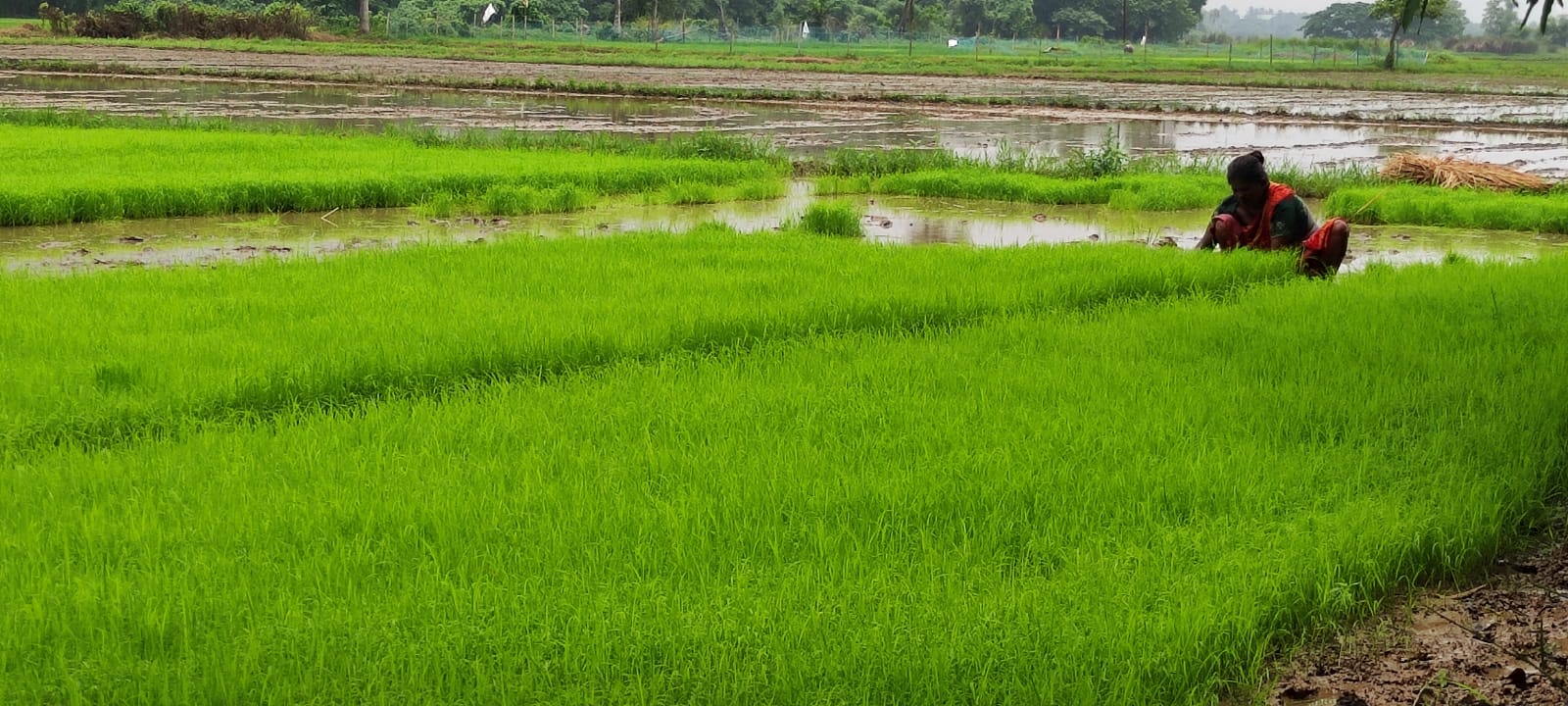
The journey begins weeks before planting in dense nursery beds where seeds are sown carefully together. as these seeds grow, they form vibrant carpets of bright emerald saplings across the farm.
When the young plants reach the right height, workers enter the shallow water to gently loosen and pull the seedlings by hand, taking care to keep the delicate root system instact. The muddy roots are rinsed clean in the field water, and the saplings are gathered into neat, round bundles tied with straw.
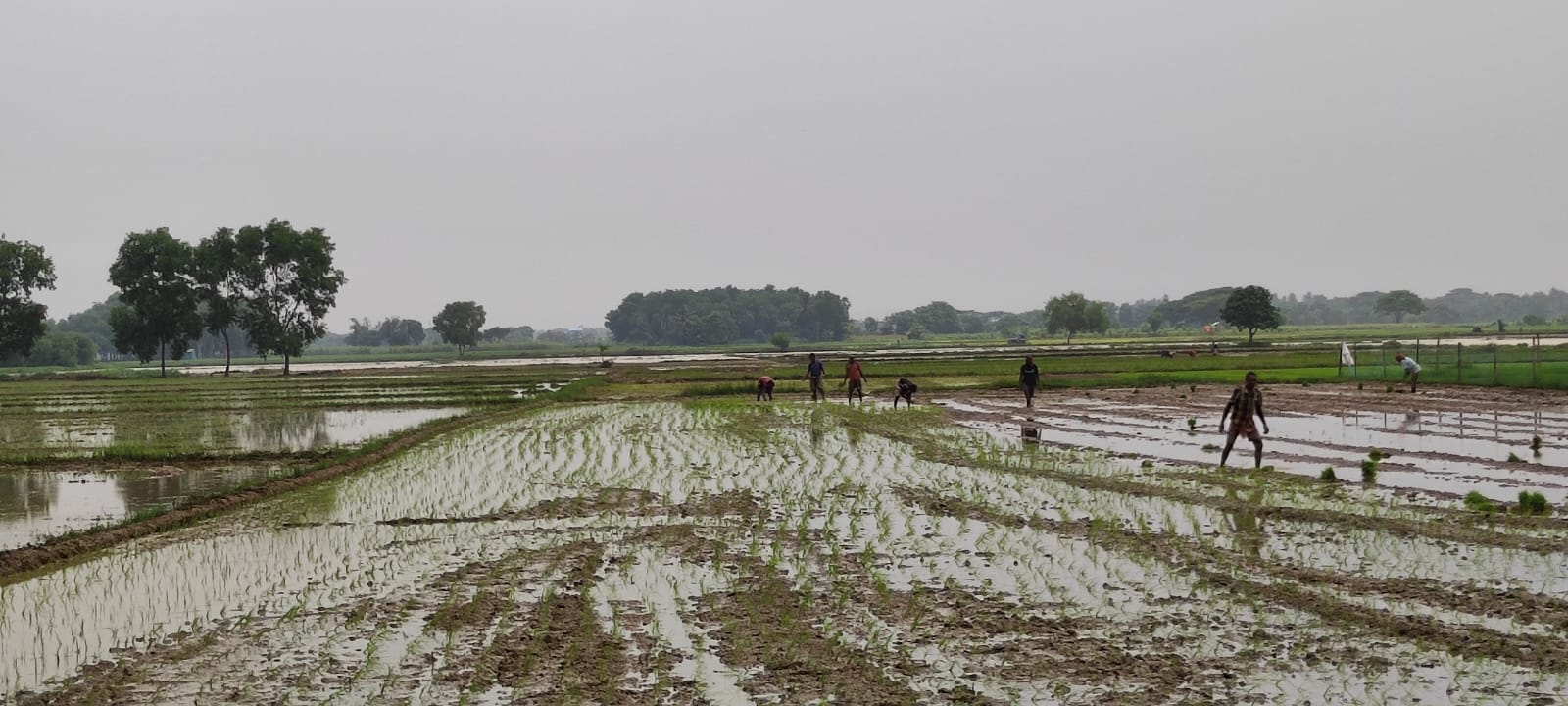
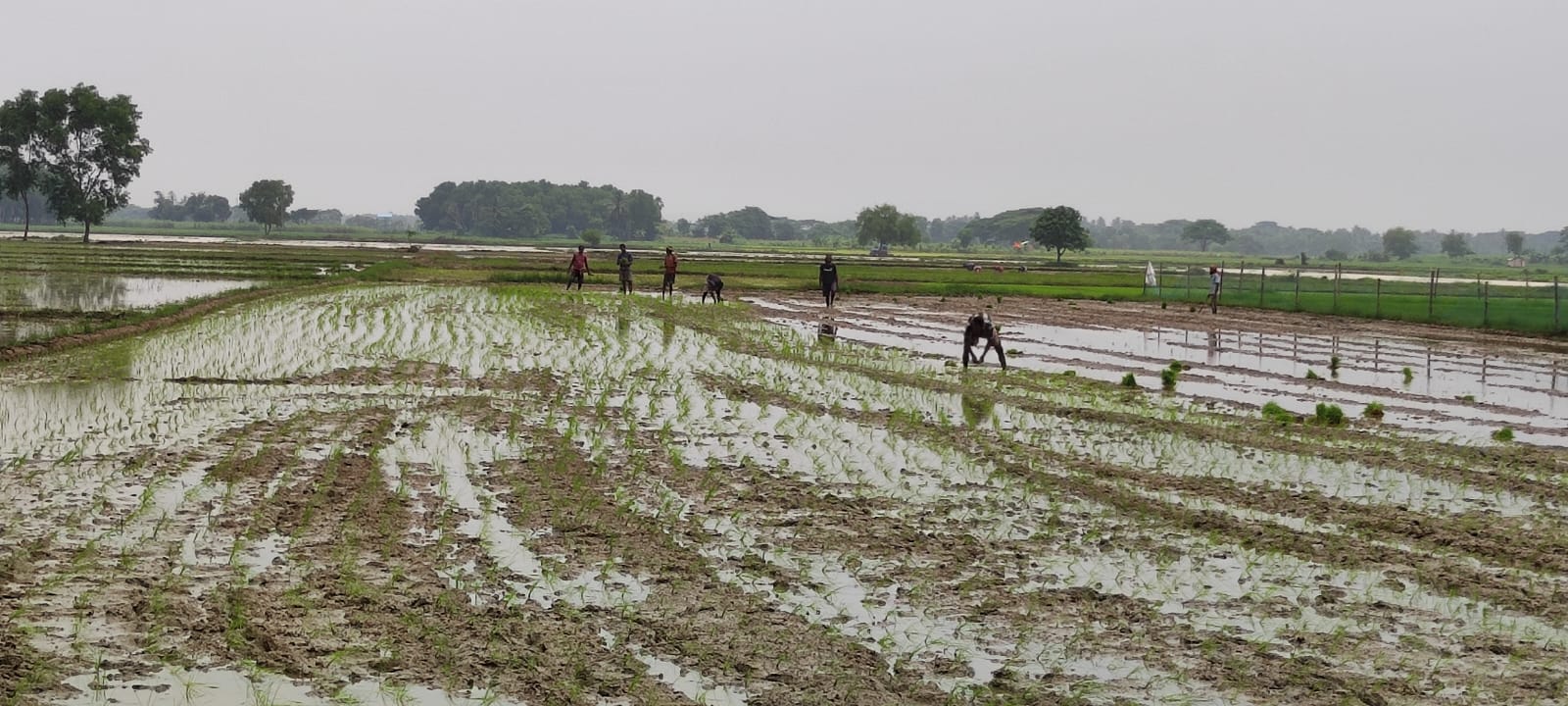
Meanwhile, the main planting plots are plowed, flooded with rainwater, and leveled into a smooth, soft mud bed.
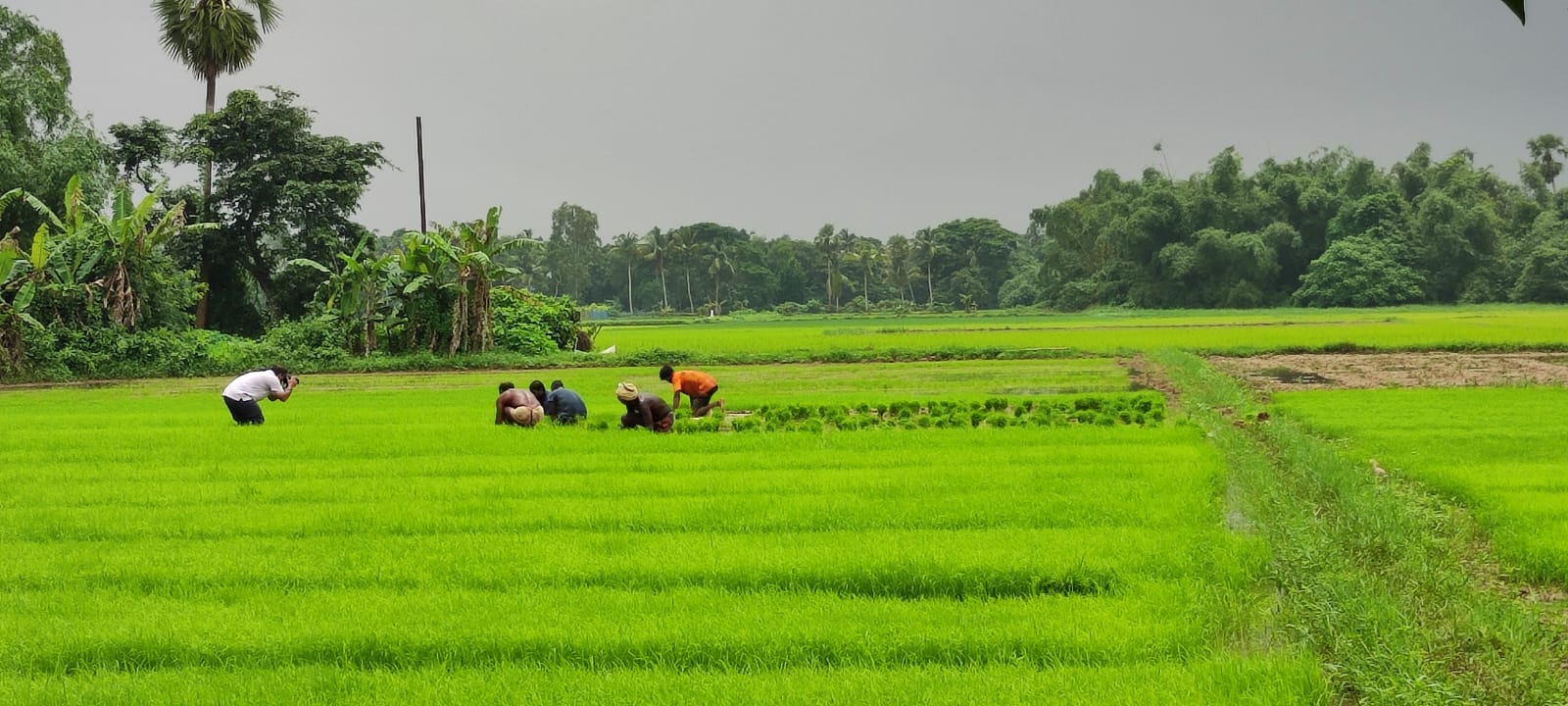
Working side by side, farmers move across the wet plots, separating small bunches of green shoots and pressing them firmly into the mud at regular intervals. planting in clean, even rows allows each rice plant to receive ample sunlight, open airflow, and space to grow strong stems.
In the field, team members also photograph and document each stage of the work, creating a helpful visual record of traditional farming in action for the wider community.
This shared efforts provides fair local livelihood opportunities, strengthens ties among farm workers, and passes valuable agricultural knowledge down to younger generations. It demonstrate that farming can be ecologically responsible and socially rewarding.
As the young green seedlings take root in the fertile mud of Maa Mati, they mark the start of a promising monsoon growing season. Over the next few months, the plants will branch out, flower, and fill the air oof Pipili with their characteristics sweet fragrance. Come winter, these green fields will turn a rich golden yellow, ready for harvest, threshing, and distribution as pure, wholesome grains.
Sowing Tradition: Govindabhog and kalajeera Paddy Transplantation Underway at Maa Mati in Pipili
Under Amruta Anna Yojana